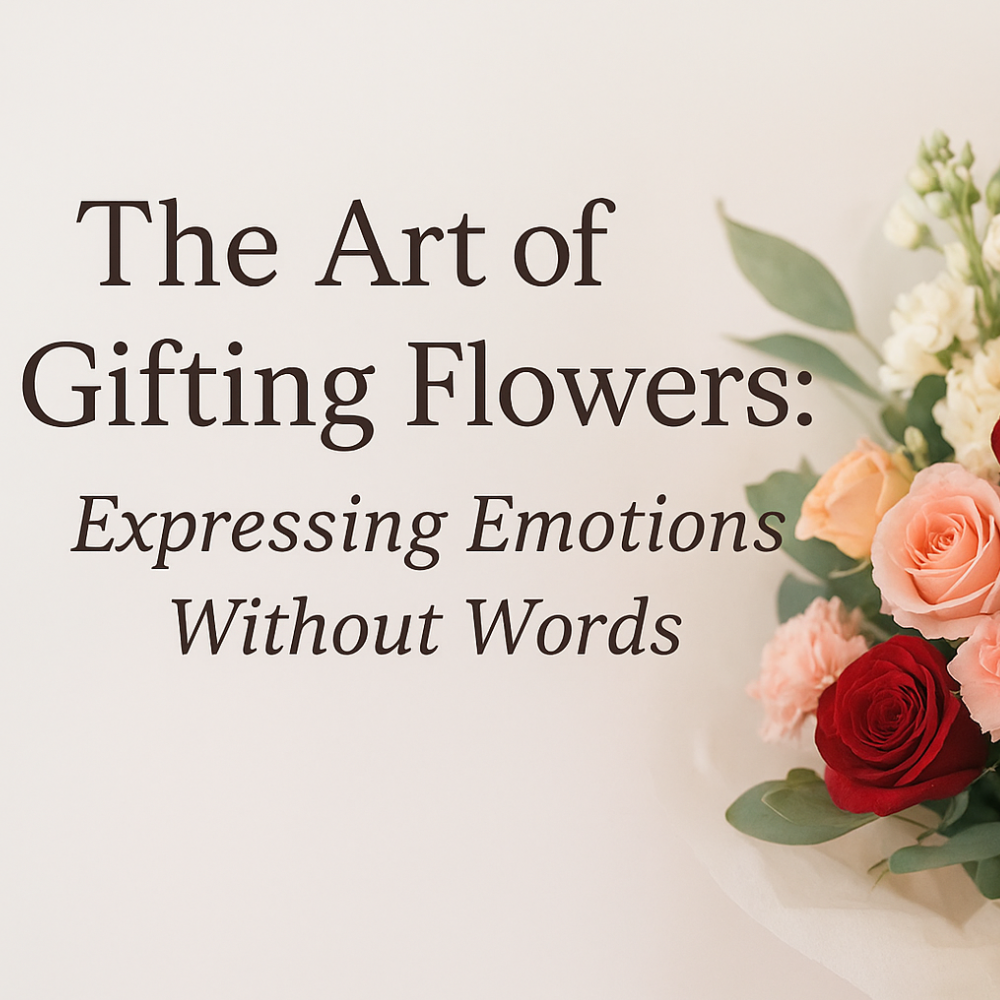
Flowers have been humanity’s favorite way of expressing emotions for centuries. They speak a language of their own — a silent, beautiful form of communication that transcends cultures and generations. Whether it’s to celebrate love, offer sympathy, or simply brighten someone’s day, flowers carry emotions that words often fail to convey.
This is the art of gifting flowers — understanding how to express what you feel, without having to say a word.
Flowers: The Universal Language of Emotion
Every flower holds meaning. A red rose might whisper love, while a white lily softly conveys sympathy. The beauty of flowers lies in their versatility — the same bouquet can express joy, respect, or appreciation, depending on the occasion and the relationship you share with the recipient.
In many cultures, flowers have symbolic associations. For example, in Japan, cherry blossoms signify renewal and the fleeting nature of life. In India, marigolds are used to symbolize celebration and purity. Understanding these meanings adds depth to your gesture, making your gift more thoughtful and heartfelt.
Choosing Flowers for Different Occasions
Gifting the right flower for the right moment is an art. Here are a few ways to ensure your bouquet perfectly matches the occasion:
1. For Love and Romance
Nothing says “I love you” quite like red roses. They symbolize passion, admiration, and commitment. But for something more unique, you can also consider tulips (representing perfect love) or orchids (symbolizing refined beauty and strength).
2. For Friendship
Yellow roses, sunflowers, and gerberas are excellent choices to celebrate friendship and positivity. They bring joy and warmth to every relationship.
3. For Sympathy or Support
White lilies, carnations, and chrysanthemums convey peace, comfort, and remembrance. These flowers express respect and compassion during difficult times.
4. For Celebrations and Milestones
Bright, vibrant flowers such as mixed roses, daisies, and lilies are perfect for birthdays, anniversaries, and achievements. They bring energy, color, and a celebratory mood.
5. For Apologies or Reconciliation
Soft-colored blooms like white tulips or pink roses are perfect for expressing sincerity and regret. They show humility and a genuine wish to make things right.
The Importance of Personalization
Every flower bouquet becomes more meaningful when it’s customized. Consider the recipient’s favorite colors, flower types, and even scents. Adding a personal touch — like a handwritten note or a carefully chosen vase — can make your gift truly unforgettable.
For example, gifting a bouquet of mixed roses can combine different meanings: red for love, yellow for joy, and pink for gratitude. It’s not just a gift — it’s a story told through petals.
The Power of Presentation
How you present your flowers matters as much as what you gift. A well-wrapped bouquet with soft fabric or kraft paper can enhance its emotional impact. For formal occasions, elegant arrangements in glass vases or wooden boxes add a refined touch.
Even the smallest gesture — like adding a ribbon or arranging flowers in a heart shape — can turn a simple bouquet into a cherished memory.
Why Flowers Always Work
Unlike material gifts, flowers are timeless. They don’t need technology, luxury, or explanation — just sincerity. Their beauty is temporary, but their emotional effect lasts forever.
When you gift flowers, you’re not just giving a plant; you’re giving a feeling — of love, peace, happiness, or comfort. And that’s why, even in today’s digital age, flowers remain the most authentic way to express the heart’s deepest emotions.
Final Thoughts
The art of gifting flowers is simple yet profound. It’s about choosing with intention and giving with emotion. Whether it’s a single rose or an elaborate bouquet, your choice of flowers can say everything you mean — without a single word.
So next time you wish to make someone smile, don’t overthink it. Just gift flowers — because sometimes, beauty itself is the message.